How to brew loose-leaf tea
If you've only ever drunk teabags, loose-leaf tea is worth the small additional effort. The flavour is fuller, the leaves can be re-steeped, and (with the right gear) it's no harder than making a teabag. This guide covers the variables that actually matter (water, temperature, time, ratio) plus the equipment that makes the difference.
The four variables
Brewing tea is a four-variable problem: water quality, water temperature, steep time, and leaf-to-water ratio. Adjust any one and the result changes. The combinations below give you reasonable starting points; tune to taste from there.
Water. The underrated variable
Water is most of what's in your cup. The water you use matters more than most people realise:
- Hard water (high in minerals) mutes delicate teas — green, white, oolong. Black teas tolerate it better.
- Very soft water can make tea taste flat, particularly for stronger blacks.
- Heavily chlorinated water kills the subtle aromatic compounds. Letting tap water stand for 30 minutes (or filtering) removes much of the chlorine.
- Filtered water is the standard recommendation for any premium loose-leaf tea. A basic Brita-style filter is enough.
Bottled spring water works well but is wasteful for everyday drinking. The biggest single improvement is filtering whatever your tap water is.
Temperature
Boiling water (100°C) is too hot for most teas other than black and herbal. The compounds that make green and white teas distinctive are damaged by very high temperatures, producing a bitter, astringent cup.
- Black tea: 95–100°C. Boiling or just-off-boil.
- Pu-erh tea: 95–100°C. Same as black.
- Oolong (lightly oxidised, like Tieguanyin): 85–90°C.
- Oolong (heavily oxidised, like Da Hong Pao): 90–95°C.
- Green tea: 70–80°C. Critical to get this right — boiling water ruins green tea.
- White tea: 75–85°C.
- Gyokuro (premium shade-grown green): 50–60°C. Yes, that low.
- Herbal blends: 100°C, full boiling.
An electric kettle with variable temperature settings is the single piece of equipment that makes the biggest difference. Around £40–£80 from any kitchen-electrical supplier; pays for itself in better tea within a few months.
Steep time
Time is the easiest variable to get wrong. Most teabag instructions suggest 3–5 minutes; loose-leaf tea is usually shorter.
- Black tea: 3–5 minutes. Longer if you take milk.
- Oolong: 2–4 minutes for first steep; 3–5 minutes for second steep.
- Green tea: 1–3 minutes. Longer than 3 minutes can produce bitterness.
- White tea: 3–5 minutes; tolerates longer steeping than green tea.
- Gyokuro: 90 seconds to 2 minutes.
- Pu-erh: 20–30 seconds for first steep (rinse the leaves first), then 1–3 minutes for subsequent steeps.
- Herbal blends: 5–10 minutes. Herbal tea extracts slowly.
Set a timer for the first cup of any new tea. Adjust on subsequent brews based on what you actually drank.
Leaf-to-water ratio
The standard starting point: 2.5g of loose-leaf tea per 200ml of water (roughly one rounded teaspoon per cup). This works for most black, green, white, and oolong teas.
Variations:
- Larger-leaf teas (Bai Mu Dan, Silver Needle, larger oolongs) take up more volume — use a tablespoon's worth.
- Herbal blends with dense roots (valerian, liquorice, ginger) — slightly less by volume, more by weight.
- For multiple steeps from the same leaves, use slightly more leaf at the start — say 3–3.5g per 200ml.
A small kitchen scale (£10–£15) measuring to 0.1g resolution is the most accurate way. A teaspoon eyeballed is fine for everyday brewing.
Equipment
You don't need much to brew loose-leaf tea well. Minimum viable kit:
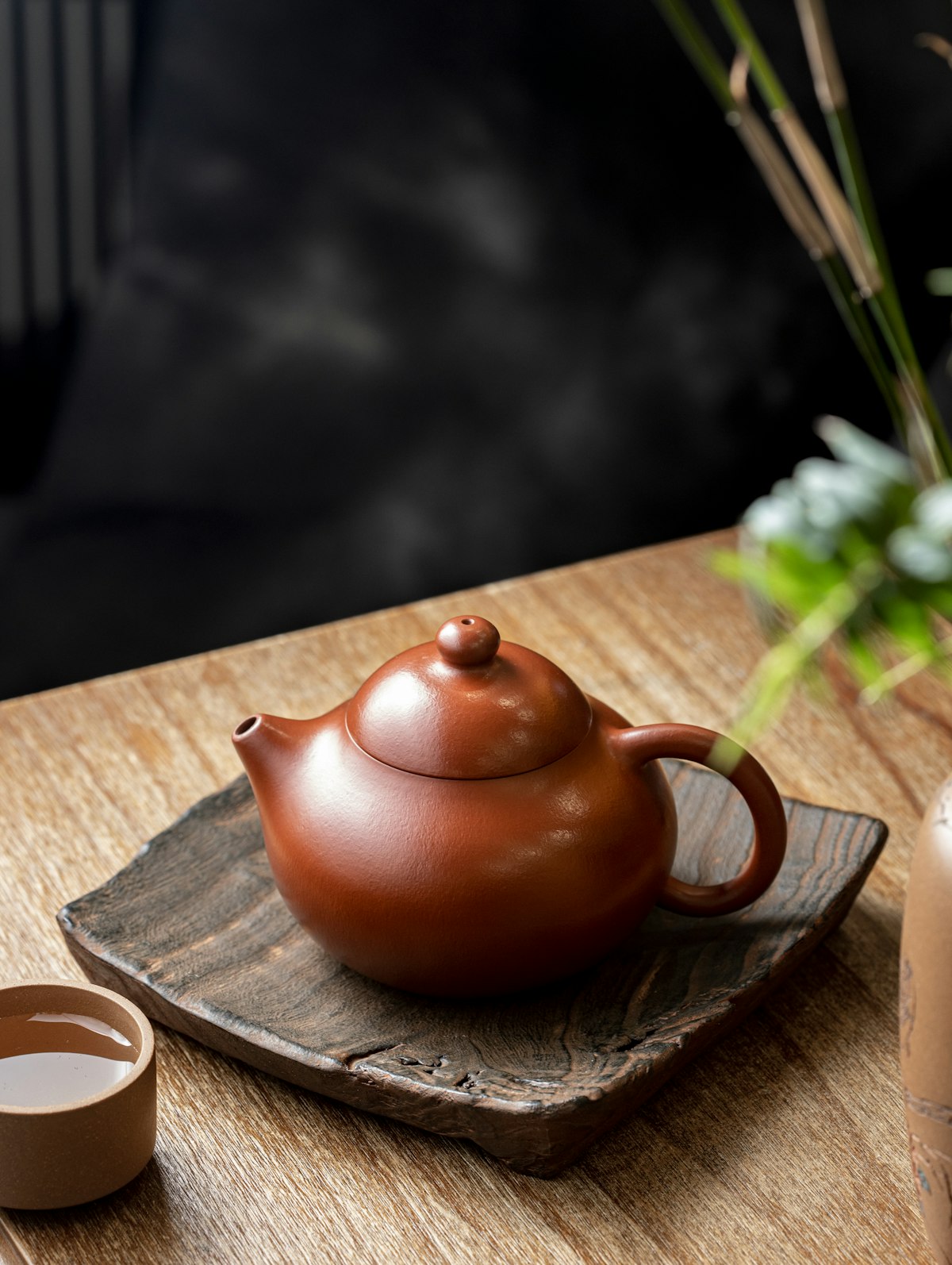
- A teapot with an integrated strainer, or a teapot plus a fine mesh strainer. We like cast-iron Japanese teapots (heavy, retain heat well, ages beautifully) and Chinese gaiwans (porcelain lidded bowls; better for ceremonial-style brewing with multiple short steeps).
- An electric kettle with temperature control. The single most useful upgrade.
- A thermometer (optional) if your kettle doesn't have one built in. Quick-read instant thermometers from a kitchen supply shop cost under £10.
- Storage jars for the loose-leaf tea — airtight, kept in a dark cupboard. Light and air degrade tea over months.
Lots of fancy gear is sold in the tea-equipment world. Most of it is unnecessary. The kettle and the teapot are the only things that meaningfully change the cup.
Multiple steepings (the loose-leaf advantage)
Most loose-leaf teas can be re-brewed. The second and third steeps are different from the first — not worse, just different. Better-quality leaves are often most rewarding on the second or third steep.
- Oolong teas traditionally get 3–5 steeps; some classic oolongs go up to 7+.
- Pu-erh teas are designed for multiple short steeps — 6–8 is normal.
- Black tea usually offers 2 reasonable steeps; the second is noticeably weaker.
- Green tea typically 2 steeps; the second is lighter and sweeter than the first.
- White tea 2–3 steeps; subtle changes with each.
- Herbal blends usually one good steep; the second is often weak.
For re-steeping, increase the steep time slightly each round (e.g., 2 min first steep, 3 min second, 4 min third).
Common mistakes
- Boiling water on green tea. The number one error. Use 75°C, not 100°C.
- Over-steeping. Leaving the leaves in for "as long as I leave a teabag" produces bitter tea. Time it.
- Not enough leaf. Pinch-of-leaf brewing produces weak tea. Use a proper measure.
- Re-using tepid water. Once your kettle has cooled, re-boil, or your tea won't extract properly.
- Brewing in too small a vessel. The leaves need room to unfurl. A pinched mesh ball in a mug doesn't give them space; use a proper teapot or large infuser.
- Storing tea in the fridge. Cold storage causes condensation when you take it out; condensation accelerates flavour loss. A cool, dark, dry cupboard is best.
The honest summary
If you adopt one habit: use the right water temperature. If you adopt two: add a proper teapot. Three: weigh the leaf and time the steep. Any one of these improves loose-leaf tea over teabags noticeably; all three together transform it.